
Panel discussion on...
ESG & Strategic Partnerships in Pharma Supply Chain


Xavier Touche
Global Head of Supply Chain at Euroapi


Alain Goasguen
Head of Environment & Energy at Euroapi

Leadership will be defined by the ability to combine resilience, sustainability, and digital intelligence into daily operations
How are you rethinking your CDMO-supplier partnerships to integrate ESG criteria?
Alain Goasguen: We are fortunate to have ambitious clients with SBTi (Science Based Targets initiative) commitments. Many major pharma companies have a SBTi “Near Term” target for 2030 across their value chain. This allows us to challenge our own value chain to offer the lowest possible carbon-intensive active ingredients. In the carbon footprint of a box of medicine, the active ingredient represents on average 50% and can reach 80%. We have been offering our clients a Product Carbon Footprint (PCF) and its improvement year to year. The more PCF in contracts, the better it is!
Xavier Touche: We prioritize suppliers that combine strong ESG practices with proven operational resilience in a highly volatile demand environment. We are strengthening both internal (supply chain & procurement) and external (with our suppliers) collaboration to improve visibility, flexibility, and risk anticipation across the network.
What digital tools or AI/ML-based platforms do you use to ensure real-time transparency, traceability, and ESG performance of your pharmaceutical supply network?
X.T.: We are working on a digital ecosystem based on our ERP that combines supply‑chain control‑tower capabilities and risk monitoring where AI plays a significant role. Our goal is to gain full end-to-end visibility, from batch level production to delivery at the doors of our customers.
A.G.: The combined information in our ERP system allows us to translate all the process improvements into changes in our product carbon footprints. AI is useful for data consistency checks. Furthermore, as a leader in sustainable development, I believe we must lead by example by being mindful of our digital resource consumption: let’s be sober in our use of AI!
How can we leverage advances in manufacturing to reduce carbon footprint, water and energy consumption, waste production and promote the circular economy?
A.G.: The first step was to map our top 20 partners. The second step is to establish partnerships based on business cases that motivate teams, refine our process, foster trust and transparency, and ultimately establish a common language. For example, we need to agree on what “100% renewable electricity” includes, and on the quality of renewable energy sources. Once transparency and trust are established, the third step will be much more methodological, for example, how to translate a solvent recycling gain into the purchased product.
How can CDMOs and pharmaceutical companies collaborate more effectively to overcome regulatory and technical barriers to the adoption of the circular economy?
A.G.: The example of solvent recycling is a very good one. Following the global nitrosamine issue a few years ago, health agencies strengthened regulations to limit recycling. Collaboration between CMOs/CDMOs and pharmaceutical companies, through organizations such as EFPIA and CEFIC in Europe are essential to make it possible to propose alternatives for maintaining a high solvent recycling rate while keeping the risk of impurities under control.
How do you align and manage your relationships with your supply chain so that you can provide the data, audit trails and assurances required by pharmaceutical customers, investors and regulatory bodies?
A.G.: Our company is subject to the CSRD (Corporate Sustainability Reporting Directive). Therefore, we undergo an annual audit of our environmental data. During our last audit in early 2026, the auditors examined the emission factors of our active pharmaceutical ingredients for the first time.
How do you integrate ESG factors into your supply chain risk management frameworks?
X.T.: We integrate risk indicators directly into our core supply‑chain processes — from dual‑sourcing strategies and safety‑stock policies to supplier mapping.
The game changer was the implementation of a S&OE (Sales & Operations Execution) process that allows us to process data at a higher frequency than S&OP (Sales & Operations Planning), enabling faster and more agile decision‑making from shop floor to top management. This is also how ESG has become a structural input into how we design redundancy, where we place inventory, and how we make short‑term operational decisions.
What lessons can pharma supply chains learn from other industries and how might these insights be applied to future strategies?
X.T.: Pharma supply chains have historically been designed around compliance, quality, and risk avoidance. However, industries such as automotive, food, FMCG have learned to achieve higher performance with significantly lower inventory by innovating faster, operating with tighter margins, and building resilience through more agile operating models, especially around synchronization of all planning and scheduling such as production, quality, maintenance and logistics.
A.G.: We definitely need to draw inspiration from other sectors, like the food industry, for the traceability throughout the value chain. The cosmetics industry is also very interesting, with often strong commitments to offering bio-based products.
Looking ahead to 2030 and beyond, what will define leadership in pharma supply-chain ESG?
A.G.: ESG leadership will translate into our ability to offer our clients more sustainable and frugal products and, in parallel, adapt our industrial tools not only to climate change but also to a more fragmented world, therefore with more multi-sourcing.
X.T.: Leadership will be defined by the ability to combine resilience, sustainability, and digital intelligence into daily operations. AI will be a key enabler, driving predictive planning, real-time risk visibility, and optimized network decisions with lower environmental impact.
How are global geopolitical events or shifting international policies, impacting your ability to deliver on ESG commitments?
A.G.: Every conflict is a real-world test of our supply chain's resilience. These adaptations have impacts but every change is also an opportunity, for example, to implement a project that had been shelved.
What role does collaboration across borders play in ensuring ESG resilience during times of conflict or crisis?
X.T.: Cross‑border collaboration is essential because it enables early risk detection, coordinated contingency planning, and rapid operational adjustments across regions.
Our experience during the Strait of Hormuz crisis illustrated this clearly. Through daily alignment between our global supply‑chain and procurement teams, constant connection with international suppliers, transparent sharing of inventory and production data, and joint scenario planning on alternative routes and shipping windows, we were able to fully maintain uninterrupted access to raw materials with a limited impact on safety stocks.
Looking to 2030, how will the role of CDMOs evolve in driving ESG innovation in pharma supply chains? What capabilities or partnerships will be most critical?
A.G.: The CDMO industry needs to be able to promote ESG in innovation while training our R&D on what is a sustainable process and where are the leads to propose clean solutions. Long-term partnerships are instrumental. That’s what we are doing with the Important Project of Common European Interest (IPCEI) program and our three projects: macrolides, corticosteroids and nanoparticles. With ESG criteria fully embedded!
X.T.: Deep digital integration through shared data platforms and AI-driven analytics will enable real-time end-to-end visibility. Success will rely on long-term partnerships underpinned by aligned KPIs and governance, jointly delivering measurable gains in service reliability, operational efficiency, resilience, and environmental performance.
Panelists

Blake Unterreiner
Vice President and Business Unit Leader, Agilent Advanced Therapeutics


Michael Rainey
Director of Supply Chain, Almac Sciences

Françoise Durand-Rivoire
Global Head of ESG, Axplora

Hans van Hees
COO of Bachem AG

Matthias Müllner
CEO and co-founder of bespark*bio

Kerstin Stangier
Head of Corporate Development, Governance & Sustainability, BioSpring

Yann Dherve
Chief Executive Officer - CDMO, Cohance Lifesciences

Roger La Force
Managing Director, Dorra Pharma Group

Joanne Flinn
Chair, The ESG Institute
Xavier Touche1, Alain Goasguen2
1. Global Head of Supply Chain at Euroapi
2. Head of Environment & Energy at Euroapi

Anne Lise Kopp
Corporate ESG & Transformation Leader, Flamma Group

Robert Dream
Managing Director, HDR COMPANY LLC

Nathalie Huther
Chief Commercial Officer, HFR

Justin Mason-Home, FRSC
Owner/Director, HPAPI Project Services Limited

Patrizia Fazio
Head of applied research coordination, Imprima

Laura Monti
Responsible Sourcing - Purchasing department, Indena

Stanislav Kazanov
Head of GRC, Cybersecurity & Sustainability, Innowise

Sonja Merkas
Founder and CEO, Livinovea

Verena Buback
Head of Sustainability Strategy, Merck Procurement

Dirk Kirschneck
Strategic Director,
Microinnova Engineering GmbH

Saharsh Davuluri
CEO & Managing Director, Neuland Laboratories

Tammy Cooper
President, Nitto Avecia and
Nitto Avecia Pharma Services



Shaojun Zhu1, Dongxin Zhang2, David Ennis3
1. Director of Sustainability Development, PharmaBlock
2. Executive Director and Head of Business for New Modalities, PharmaBlock
3. Executive Advisor, PharmaBlock

Peter DeYoung
CEO, Piramal Global Pharma


Sonia Rasi1, Michele Tappa2
1. Financial Director & Chief Sustainability Officer, Procos
2. ESG Manager, Procos
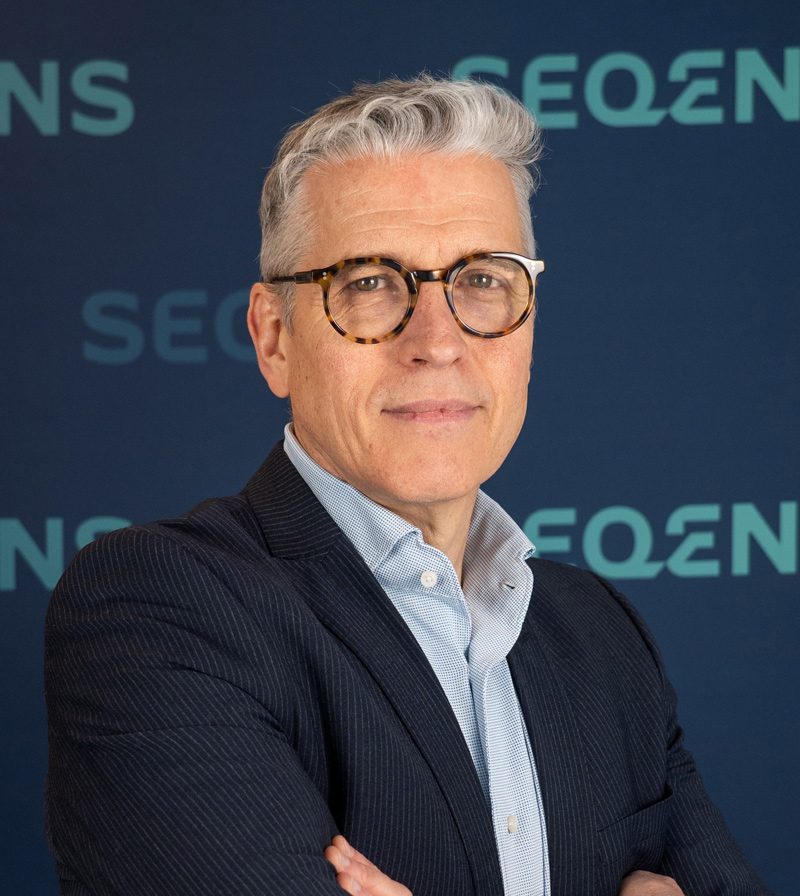
Pascal Villemagne
CEO, Seqens

Darryl Ratty
Executive Director, Global ESG, SK pharmteco


Natalia Agüeros1, Ralf Karch2
1. Sr. Director, ESG & Sustainability, Umicore
2. Director BU Research & Development at PMC, Umicore

Dani Reguant
Supply Chain Director, Uquifa Group
References and notes
- Howes, M.J.R., Simmonds, M.S.J. and Kite, G.C. (2004) 'Evaluation of the quality of sandalwood essential oils by gas chromatography–mass spectrometry', Journal of Chromatography A, 1028(2), pp. 307-312. doi: 10.1016/j.chroma.2003.11.093.
- RTI Health, Social, and Economics Research (2002) 'The Economic Impacts of Inadequate Infrastructure for Software Testing', Report prepared for the National Institute of Standards and Technology (NIST), Gaithersburg, MD.