
Panel discussion on...
ESG & Strategic Partnerships in Pharma Supply Chain


Dr. Verena Buback
Head of Sustainability Strategy,
Merck Procurement


ESG is increasingly shifting from “box-ticking” to being a strategic differentiator in pharma supply chains. How are you re-thinking your CDMO-supplier partnerships to embed environmental, social and governance criteria at the core of your contracts and operations?
For us, the shift started years ago by moving ESG from a stand-alone sustainability discussion into core procurement processes. We gradually embedded ESG expectations more and more into different steps throughout the supplier lifecycle. We first established clear sustainability requirements through our Supplier Code of Conduct, for instance with detailed measures how to reduce GHG emission in our joint value chain.
The next step was embedding ESG-clauses into supplier contracts to agree suppliers will have decarbonization strategies in place, progress renewable electricity adoption, and consider human rights and responsible business conduct as important factors of their operations.
We then moved beyond expectations by introducing supplier sustainability performance as an influencing factor in procurement decisions. We have implemented a Supplier Sustainability Score that combines specific decarbonization-related criteria and external sustainability assessments to an overall ESG performance. This score is integrated with a relevant percentage into supplier evaluation and supplier selection. Sustainability is therefore no longer a side consideration, but already one of the many criteria informing the sourcing decision. ESG requirements also play a role within our supplier classification. With our strategic and key suppliers, sustainability is a regularly discussed topic alongside classic procurement topics.
What I find particularly powerful is the connection we have established between supplier choices and broader company objectives. Sourcing decisions influence KPIs for management compensation and corporate performance targets. When sustainability becomes part of management scorecards and business performance measurement, ESG moves from compliance into business strategy.
Supply-chain resilience and ESG are no longer separate agendas: climate events, social disruptions, governance lapses all inject risk. How are you integrating ESG factors into your supply-chain risk-management frameworks — including supplier mapping, scenario-modelling, redundancy, reshoring/diversification strategy?
I believe the ESG performance is a significant contributor to resilience and business growth.
Many of the disruptions organizations face today—whether climate-related events, human rights concerns all the way upstream the value chain, geopolitical tensions or local incidents—have both sustainability and business continuity implications.
For that reason, ESG factors are integrated into our supplier risk-management framework for several years already. ESG assessments contribute to supplier risk evaluation and form part of our third-party risk processes alongside traditional financial, legal and operational risk considerations.
At the same time, we are moving toward greater transparency across our supply base through the combination of internal and external information sources. We continuously monitor sustainability-related developments and supplier information to identify emerging risks early and enable targeted mitigation actions. The goal is to understand which suppliers, materials, services or regions are most exposed and where action is needed before a disruption occurs.
The organizations with the strongest resilience in the future will be those having the strongest visibility into them and leverage these insights for early decision-making.
What role do AI and digital technologies play in achieving ESG transparency, traceability and performance across complex supply networks?
This is probably where I see the biggest transformation opportunity over the next few years. Most organizations still focus on collecting sustainability data. We are increasingly focused on turning data into decisions.
To support this, we are working towards connecting multiple internal and external data sources into a central sustainability intelligence environment to enable sourcing and sustainability teams to work from a single source of truth. Rather than navigating disconnected systems, users must be able to access supplier sustainability information in one place, to effectively and in real time prepare for supplier discussions and consider supplier sustainability scores in their daily operations.
We are also leveraging AI to scale activities that traditionally require significant manual effort. For example, we have developed an agent that help monitor relevant news events, assess potential implications for Merck and accelerate information sharing across the organization.
One particularly exciting area is the transition from supplier-level to product-level risk assessment. Many ESG risks depend not only on the supplier itself but also on the specific material or service we purchase. Particularly relevant becomes knowledge about the manufacturing process itself and the actual manufacturing location.
We are currently exploring how AI can help pre-screen purchased portfolios and identify inherent ESG risks at a much greater scale than traditional approaches allow. Early pilots show promising results, particularly in assessing human-rights-related risks in purchased services. What is most encouraging is not only the speed but also the consistency, reproducibility and transparency that Large Language Models are meanwhile able to deliver.
I believe this capability will fundamentally change how procurement organizations identify and prioritize risks in the future.
Looking ahead to 2030 and beyond, what will define leadership in pharma supply-chain ESG? What capabilities will best-in-class organizations have — and where are most firms falling behind today?
The biggest misconception today is that ESG leadership is primarily about collecting more data. That is true for today because many companies still lack transparency into their supplier chain. By 2030, everyone will have that data and transparency. The real differentiator will be two elements: one, the decision quality resulting from those insights and two, the timing of the insights-based decisions, both to prevent risks from actually occurring as well as the speed to act on incidents.
Leading organizations will combine three capabilities: trusted supply-chain transparency, AI-enabled decision intelligence supporting scenario modelling, and strong strategic partnerships within an ecosystem that provides room to maneuver.
The most advanced companies will be able to identify emerging patterns earlier, anticipate risks before competitors and translate sustainability information into superior business decisions. They will move from reporting what happened yesterday to predicting what may happen tomorrow and preparing accordingly.
At the same time, technology alone will not create this advantage. Many organizations are currently trying to apply AI to inefficient processes. In my view, this limits the potential significantly. The real transformation starts by redesigning data foundations and business processes first. Only then can AI be deployed effectively to automate specific activities, enhance insights and improve decision-making.
The other critical success factor is people. As AI takes over more analytical and repetitive tasks, human capabilities become even more important. Skills such as stakeholder management, leadership & influencing, process design, critical thinking and results validation will become key differentiators.
The future is not AI replacing people. It is AI enabling people to deliver better quality faster.
Panelists

Blake Unterreiner
Vice President and Business Unit Leader, Agilent Advanced Therapeutics


Michael Rainey
Director of Supply Chain, Almac Sciences

Françoise Durand-Rivoire
Global Head of ESG, Axplora

Hans van Hees
COO of Bachem AG

Matthias Müllner
CEO and co-founder of bespark*bio

Kerstin Stangier
Head of Corporate Development, Governance & Sustainability, BioSpring

Yann Dherve
Chief Executive Officer - CDMO, Cohance Lifesciences

Roger La Force
Managing Director, Dorra Pharma Group

Joanne Flinn
Chair, The ESG Institute


Xavier Touche1, Alain Goasguen2
1. Global Head of Supply Chain at Euroapi
2. Head of Environment & Energy at Euroapi

Anne Lise Kopp
Corporate ESG & Transformation Leader, Flamma Group

Robert Dream
Managing Director, HDR COMPANY LLC

Nathalie Huther
Chief Commercial Officer, HFR

Justin Mason-Home, FRSC
Owner/Director, HPAPI Project Services Limited

Patrizia Fazio
Head of applied research coordination, Imprima

Laura Monti
Responsible Sourcing - Purchasing department, Indena

Stanislav Kazanov
Head of GRC, Cybersecurity & Sustainability, Innowise

Sonja Merkas
Founder and CEO, Livinovea
Verena Buback
Head of Sustainability Strategy, Merck Procurement

Dirk Kirschneck
Strategic Director,
Microinnova Engineering GmbH
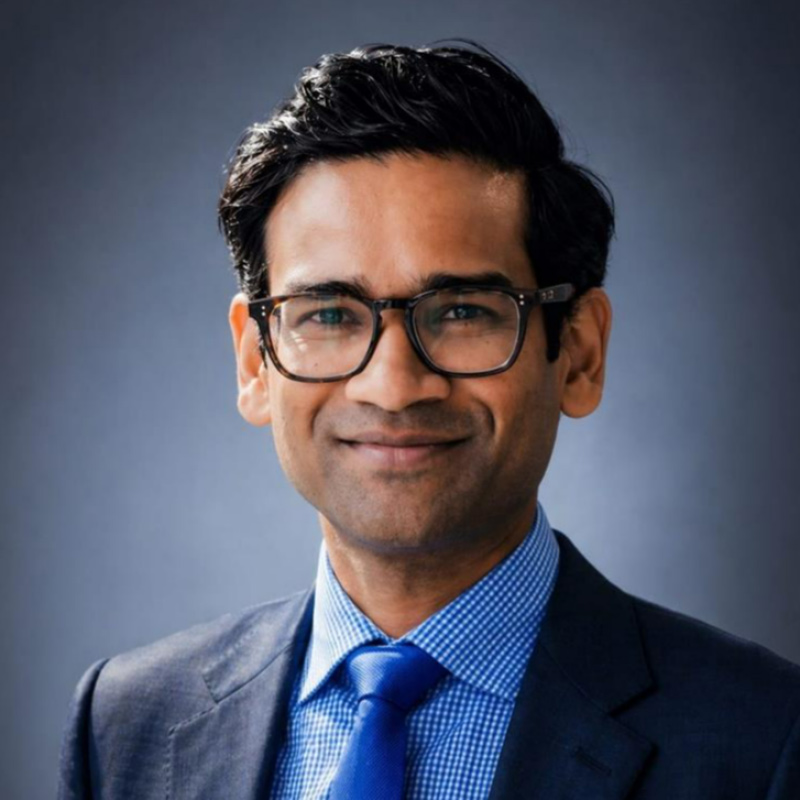
Saharsh Davuluri
CEO & Managing Director, Neuland Laboratories

Tammy Cooper
President, Nitto Avecia and
Nitto Avecia Pharma Services



Shaojun Zhu1, Dongxin Zhang2, David Ennis3
1. Director of Sustainability Development, PharmaBlock
2. Executive Director and Head of Business for New Modalities, PharmaBlock
3. Executive Advisor, PharmaBlock

Peter DeYoung
CEO, Piramal Global Pharma


Sonia Rasi1, Michele Tappa2
1. Financial Director & Chief Sustainability Officer, Procos
2. ESG Manager, Procos
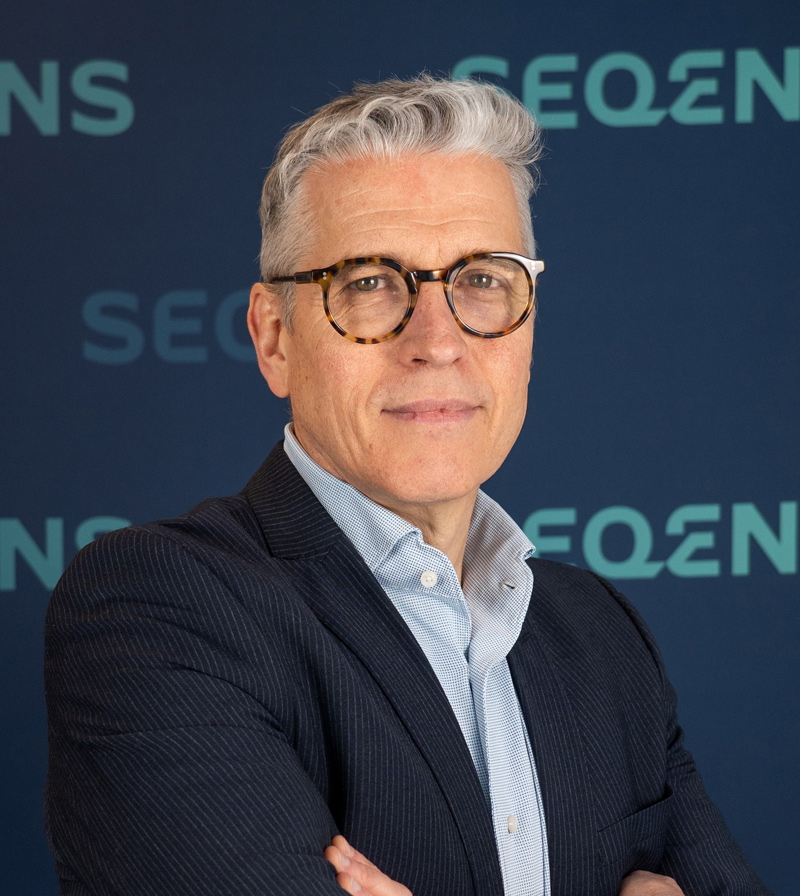
Pascal Villemagne
CEO, Seqens

Darryl Ratty
Executive Director, Global ESG, SK pharmteco


Natalia Agüeros1, Ralf Karch2
1. Sr. Director, ESG & Sustainability, Umicore
2. Director BU Research & Development at PMC, Umicore

Dani Reguant
Supply Chain Director, Uquifa Group
References and notes
- Howes, M.J.R., Simmonds, M.S.J. and Kite, G.C. (2004) 'Evaluation of the quality of sandalwood essential oils by gas chromatography–mass spectrometry', Journal of Chromatography A, 1028(2), pp. 307-312. doi: 10.1016/j.chroma.2003.11.093.
- RTI Health, Social, and Economics Research (2002) 'The Economic Impacts of Inadequate Infrastructure for Software Testing', Report prepared for the National Institute of Standards and Technology (NIST), Gaithersburg, MD.