
Panel discussion on...
ESG & Strategic Partnerships in Pharma Supply Chain


Anne Lise Kopp
Corporate ESG & Transformation Leader, Flamma Group


ESG is increasingly shifting from “box-ticking” to being a strategic differentiator in pharma supply chains. How are you re-thinking your CDMO-supplier partnerships to embed environmental, social and governance criteria at the core of your contracts and operations?
ESG has been wrongly framed as a compliance layer, but showing in practice that it is a core driver of supply-chain resilience.
In today’s geopolitical context, the main vulnerabilities of pharmaceutical supply chains are not only linked to supplier concentration, but to structural dependencies—particularly on fossil-based energy and solvent value chains. This creates systemic exposure that cannot be addressed through traditional sourcing strategies alone.
At Flamma, we are progressively using ESG as an operational tool to strengthen resilience across four priorities.
First, we are accelerating the transition toward renewable energy within our own operations, while starting to engage our key suppliers by requesting Scope 1 and 2 data and opening discussions on their transition pathways. The objective is not only decarbonization but reducing exposure to energy volatility and improving predictability across the supply chain.
Second, we are exploring alternative chemistries, including bio-based solvents, to reduce dependency on petrochemical inputs. However, this transition cannot happen at scale without stronger ecosystem alignment. It requires, on one side, regulatory clarity to ensure that these alternatives can be fully integrated within GMP expectations, and on the other, long-term commitments across the value chain. In practice, this means aligning volumes and quality expectations early, so that suppliers can invest in the necessary capacity and purification standards.
Third, we are structuring carbon accounting across Scope 3 and progressively integrating Life Cycle Assessment (LCA) approaches. This is not a reporting exercise. It provides visibility on upstream dependencies and anticipates regulatory developments already underway—for example in France and the UK, where carbon-related criteria are being embedded into public healthcare and supplier requirements.
Finally, circularity, especially solvent recovery—is a key resilience lever. Industry experience shows that recycled solvents, when managed through a science- and risk-based approach, can meet GMP requirements while reducing both environmental impact and reliance on external supply chains.
This transformation requires much deeper integration with suppliers. ESG is no longer a questionnaire, it becomes a shared operational agenda.
However, a structural challenge remains: a significant part of innovation and specialty chemistry sits within small and mid-sized players. These companies are often the most exposed to the speed of investment required in digitalization and sustainability. There is a real risk, in the current multi-crisis context, that part of this ecosystem could be weakened.
This raises an important industry question. Initiatives such as PSCI or the Sustainable Markets Initiative will need to more actively integrate mid-sized CDMOs—not only large players—to ensure that transformation remains inclusive and that innovation capacity is preserved across the value chain.
Looking to 2030, how will the role of CDMOs evolve in driving ESG innovation in pharma supply chains? What capabilities or partnerships will be most critical?
By 2030, the role of CDMOs will evolve from compliance-driven contributors to active enablers of both sustainability and supply-chain resilience.
CDMOs operate at the interface between pharma companies and complex upstream supply networks. This position creates a specific responsibility: translating ESG ambitions into operational solutions that work within GMP, quality, and industrial constraints.
Three capabilities will differentiate leading CDMOs.
The first is the ability to make sustainability measurable and actionable—integrating carbon footprint, solvent use, and circularity metrics directly into process development and manufacturing decisions.
The second is the deployment of circular and low-dependency solutions at scale, including solvent recovery, bio-based inputs, and energy-flexible production. These are not incremental improvements, but structural responses to supply-chain fragility.
The third is supplier integration. CDMOs will increasingly act as orchestrators of their upstream ecosystem, aligning suppliers on data transparency, energy transition, and risk management.
However, this transformation will not happen without stronger and more explicit involvement from large pharmaceutical companies.
Three enablers are critical.
First, regulatory evolution is needed to maintain and clarify a science- and risk-based approach to solvent recycling within GMP frameworks, avoiding overly restrictive interpretations that could slow down circularity.
Second, targeted investment is required to build solvent recovery and purification infrastructure adapted to pharmaceutical realities—small batches, high purity requirements, and advanced regeneration technologies.
Third, and most importantly, procurement models must evolve. Sustainability and resilience cannot scale without contractual visibility. CDMOs need long-term, binding commitments to justify investments and enable the entire upstream ecosystem—including solvent suppliers—to scale capacity at the required level of quality and reliability.
Interestingly, within the pharmaceutical sector itself, packaging and device supply chains have progressed significantly faster on circularity and supplier engagement. This demonstrates that the capabilities, tools, and willingness already exist within large pharma organizations. The gap observed in API and CDMO manufacturing is therefore not a question of feasibility, but of prioritization and incentives.
As seen in cosmetics, integrating LCA, circularity, and supplier engagement from the design phase accelerates transformation—an approach pharma is only starting to scale.
Leadership by 2030 will come from those able to create this alignment across the full value chain.
Panelists

Blake Unterreiner
Vice President and Business Unit Leader, Agilent Advanced Therapeutics


Michael Rainey
Director of Supply Chain, Almac Sciences

Françoise Durand-Rivoire
Global Head of ESG, Axplora

Hans van Hees
COO of Bachem AG

Matthias Müllner
CEO and co-founder of bespark*bio

Kerstin Stangier
Head of Corporate Development, Governance & Sustainability, BioSpring

Yann Dherve
Chief Executive Officer - CDMO, Cohance Lifesciences

Roger La Force
Managing Director, Dorra Pharma Group

Joanne Flinn
Chair, The ESG Institute


Xavier Touche1, Alain Goasguen2
1. Global Head of Supply Chain at Euroapi
2. Head of Environment & Energy at Euroapi
Anne Lise Kopp
Corporate ESG & Transformation Leader, Flamma Group

Robert Dream
Managing Director, HDR COMPANY LLC
Nathalie Huther
Chief Commercial Officer, HFR

Justin Mason-Home, FRSC
Owner/Director, HPAPI Project Services Limited

Patrizia Fazio
Head of applied research coordination, Imprima

Laura Monti
Responsible Sourcing - Purchasing department, Indena

Stanislav Kazanov
Head of GRC, Cybersecurity & Sustainability, Innowise

Sonja Merkas
Founder and CEO, Livinovea

Verena Buback
Head of Sustainability Strategy, Merck Procurement

Dirk Kirschneck
Strategic Director,
Microinnova Engineering GmbH
Saharsh Davuluri
CEO & Managing Director, Neuland Laboratories

Tammy Cooper
President, Nitto Avecia and
Nitto Avecia Pharma Services


Shaojun Zhu1, Dongxin Zhang2, David Ennis3
1. Director of Sustainability Development, PharmaBlock
2. Executive Director and Head of Business for New Modalities, PharmaBlock
3. Executive Advisor, PharmaBlock

Peter DeYoung
CEO, Piramal Global Pharma

Sonia Rasi1, Michele Tappa2
1. Financial Director & Chief Sustainability Officer, Procos
2. ESG Manager, Procos
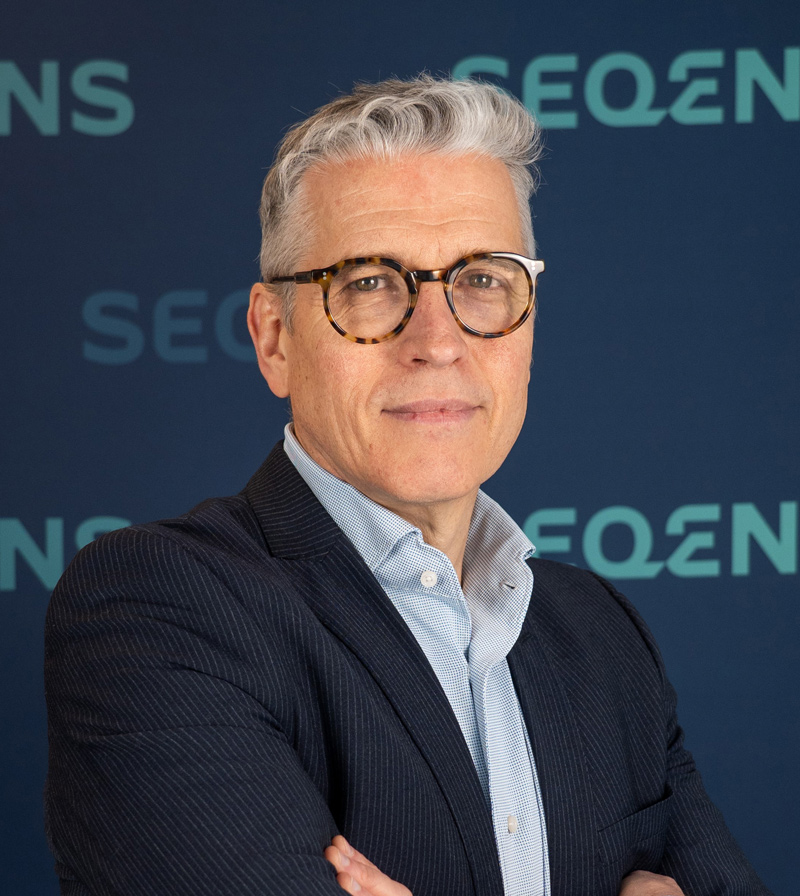
Pascal Villemagne
CEO, Seqens
Darryl Ratty
Executive Director, Global ESG, SK pharmteco


Natalia Agüeros1, Ralf Karch2
1. Sr. Director, ESG & Sustainability, Umicore
2. Director BU Research & Development at PMC, Umicore

Dani Reguant
Supply Chain Director, Uquifa Group
References and notes
- Howes, M.J.R., Simmonds, M.S.J. and Kite, G.C. (2004) 'Evaluation of the quality of sandalwood essential oils by gas chromatography–mass spectrometry', Journal of Chromatography A, 1028(2), pp. 307-312. doi: 10.1016/j.chroma.2003.11.093.
- RTI Health, Social, and Economics Research (2002) 'The Economic Impacts of Inadequate Infrastructure for Software Testing', Report prepared for the National Institute of Standards and Technology (NIST), Gaithersburg, MD.